
Health and safety systems are only effective when organisations can demonstrate that they are actively managing risk, meeting their obligations, and continuously improving.
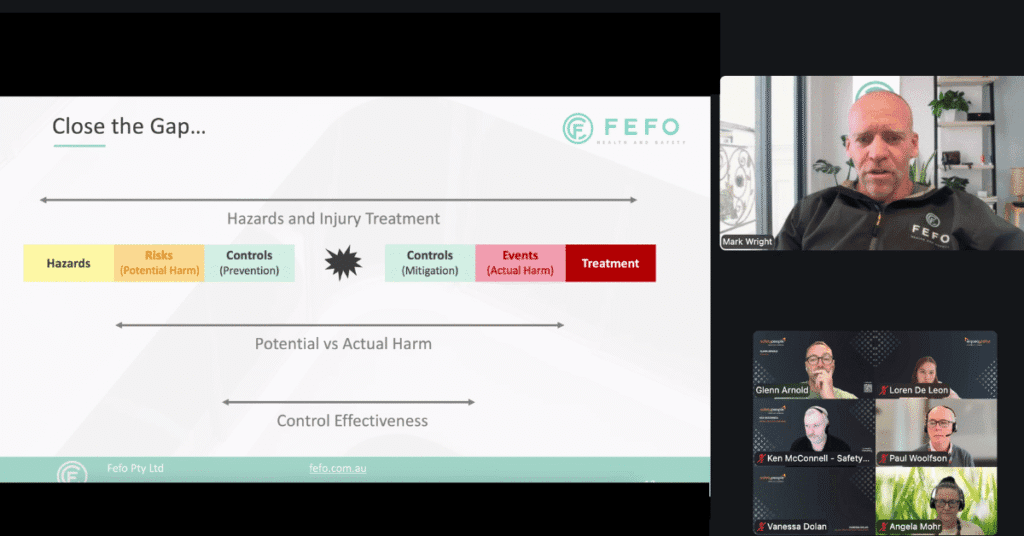
At our recent July Safety People Forum, we were joined by Mark Wright for an insightful discussion on “Measuring Health and Safety Performance: Is Your Due Diligence and Assurance Effective?”
Mark explored the importance of looking beyond compliance and documentation, challenging safety leaders to consider whether their systems are genuinely providing confidence that risks are being identified, controlled, and managed effectively.
Rather than simply asking whether safety processes exist, the discussion focused on a more important question:
Are your safety systems actually working?
Here are the 6 key takeaways:
1. Safety performance needs to be measured beyond lag indicators
A major theme throughout Mark’s presentation was the importance of understanding what safety performance data is really telling organisations.
While traditional measures such as incidents, injuries and lost time remain important, they only provide part of the picture.
Effective safety assurance requires organisations to also look at whether proactive controls are working.
This means asking:
- Are critical risks being effectively managed?
- Are controls being implemented as intended?
- Are leaders actively involved in safety performance?
- Are systems identifying issues before they result in harm?
Measuring performance is not just about tracking what has happened. It is about understanding whether your organisation is prepared to prevent what could happen.
2. Due diligence requires active oversight
Due diligence is not a once-a-year review or a compliance exercise.
For officers and leaders, it requires active involvement in understanding workplace risks, ensuring appropriate resources are available, and verifying that safety systems are effective.
Strong due diligence involves having confidence in the information being reported and asking the right questions.
Safety leaders should consider:
- Does leadership have visibility of the organisation’s highest risks?
- Are safety reports providing meaningful insights?
- Are decisions being supported by reliable information?
- Are improvement actions being followed through?
Good assurance gives leaders confidence that safety is being managed, not simply documented.
3. Critical risk management remains a priority
Critical risk management continues to be an area where organisations are investing significant focus.
Mark highlighted the importance of ensuring critical controls are not only identified but actively monitored and reviewed.
This aligns with what we are seeing in the safety recruitment market, with organisations increasingly seeking professionals who have experience in:
- Critical risk management
- Contractor management
- Safety system improvement
- Implementing risk reduction programs
The ability to move organisations from reactive responses towards proactive risk management is becoming an increasingly valuable capability.
4. Reporting and data need to support better decisions
Another key discussion point was the role of data in improving safety performance.
Safety teams are collecting more information than ever, but the challenge is ensuring that information leads to meaningful action.
Effective reporting should help organisations understand:
- Where risks are emerging
- Whether controls are effective
- Where improvements are required
- How safety performance is changing over time
The goal is not simply producing more reports. It is creating better insights that support stronger decisions.
5. Psychosocial safety continues to shape safety priorities
The discussion also highlighted the continued demand for capability in psychosocial safety.
As organisations continue to strengthen their approach to managing psychosocial risks, safety professionals with experience in this area remain highly sought after.
This reflects a broader shift in health and safety, where organisations are increasingly focused on managing both physical and psychological risks as part of a complete safety strategy.

6. Safety workforce trends remain resilient
Following Mark’s presentation, the conversation also touched on the current safety recruitment landscape.
While the market has stabilised compared with previous years, demand remains strong for experienced safety professionals across Australia.
We continue to see organisations seeking specialists for:
- Short-term contract roles
- Parental leave and project coverage
- Safety system improvement initiatives
- Senior safety leadership positions
Professionals who can combine technical safety knowledge with practical experience improving systems and influencing change remain highly valued.
What Should Safety Leaders Be Doing Now?
The key message from Mark’s session was clear:
Effective safety performance requires organisations to continually test, review and improve their systems.
Safety leaders should consider:
- Reviewing whether current assurance processes provide genuine confidence.
- Assessing whether critical controls are effective in practice.
- Ensuring safety data is being used to drive decisions.
- Strengthening leadership visibility of key risks.
- Reviewing whether reporting systems provide meaningful insights.
- Continuing to build capability in emerging areas such as psychosocial safety.
The Bottom Line
Health and safety performance is not measured by the number of policies an organisation has or the volume of reports it produces.
It is measured by whether organisations can demonstrate that risks are understood, controls are effective, and improvements are being made.
As workplaces continue to evolve, strong due diligence and assurance will remain essential in helping organisations protect their people and meet their responsibilities.
A big thank you to Mark Wright for sharing his insights and experience with our safety community, and to everyone who joined our July Safety Forum.
If there are topics or speakers you would like us to feature in future Safety Forums, we would love to hear from you.
Building Stronger WHS Capability
At Safety People, we help organisations build safety capability by connecting them with experienced WHS professionals across permanent, contract, and executive roles.
Whether you are strengthening your safety systems, improving risk management capability, or building your next safety leadership team, our specialist recruitment consultants can help you find the right expertise.
Contact us today to learn more at [email protected] or call 1300 28 00 68.