
The work health and safety landscape is evolving at a rapid pace. New legislation, changing regulatory expectations, emerging technologies, and shifting workplace risks are all reshaping what effective safety leadership looks like.
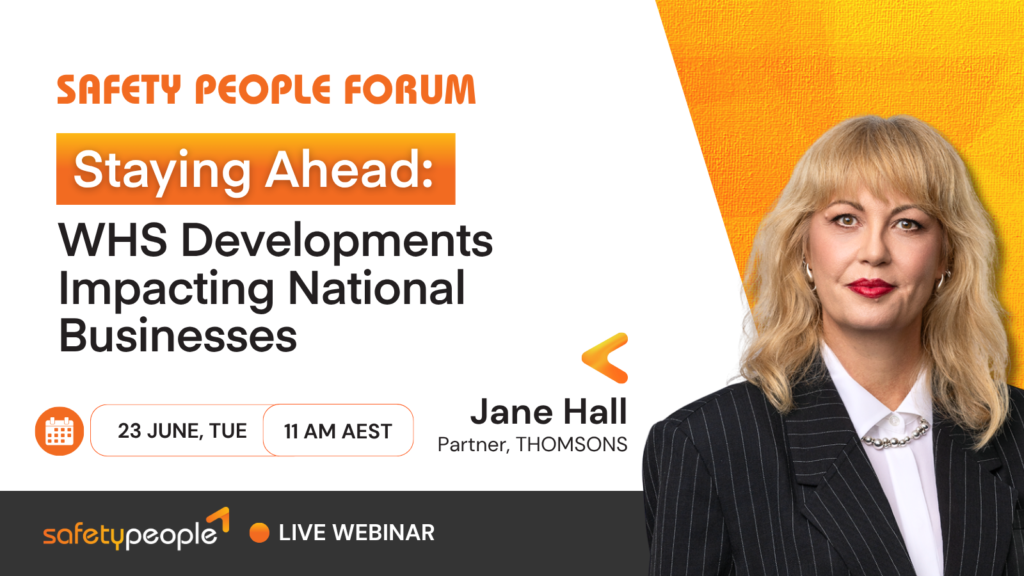
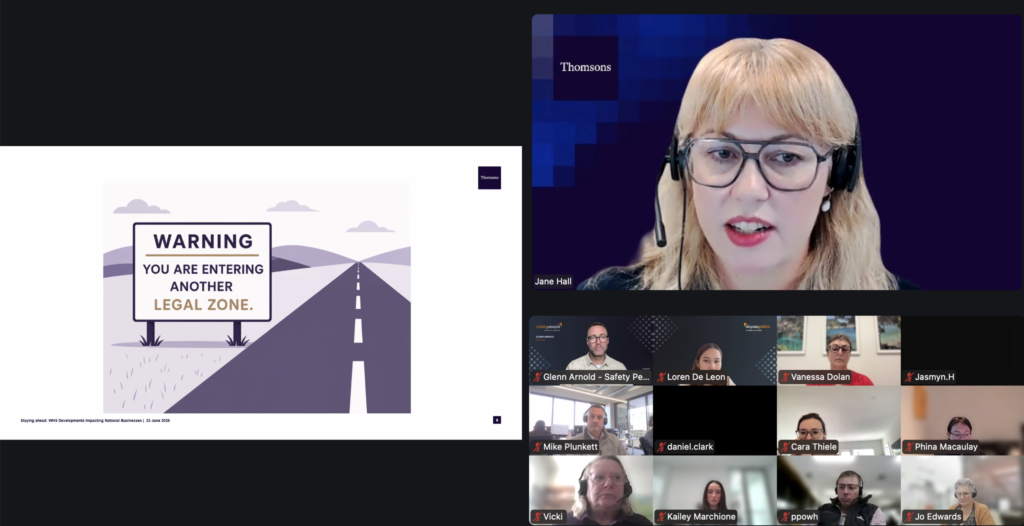
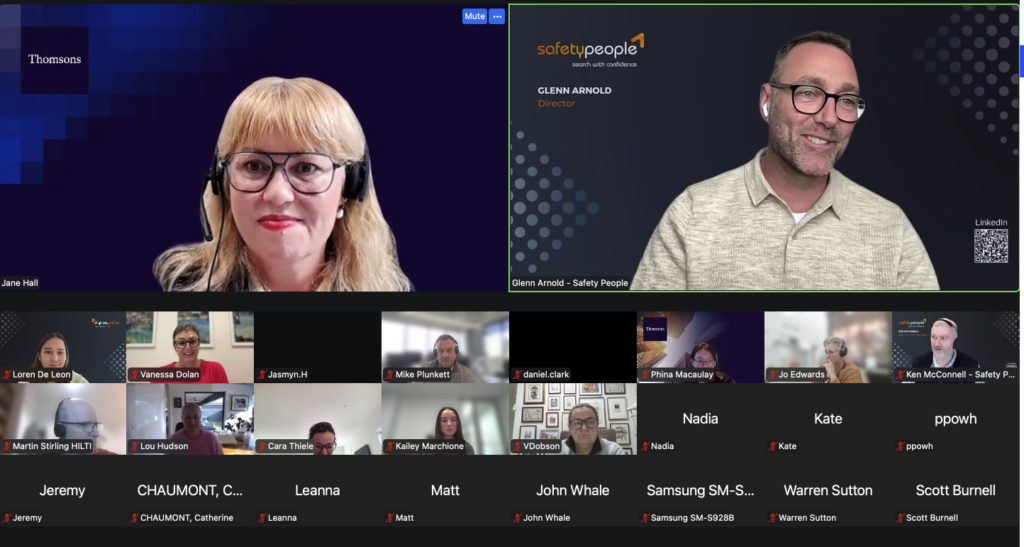
At our recent June Safety People Forum, we were honoured to have guest speaker Jane Hall, Partner at Thomsons, who explored the legal and practical developments that WHS professionals should have on their radar.
Rather than focusing solely on legislative changes, Jane highlighted what these developments mean in practice and how organisations can start preparing now.
Here are the key takeaways:
1. Codes of Practice Are Becoming More Than Just Guidance
One of the biggest talking points was Section 26A, which comes into effect in New South Wales on 1 July and already applies in Queensland.
While many organisations are wondering whether this dramatically changes compliance obligations, Jane explained that the biggest shift may be in how regulators enforce Codes of Practice.
Historically, Codes of Practice have played an important role in determining what is considered “reasonably practicable.” Regulators have long relied on them when assessing whether an organisation has met its WHS duties.
What Section 26A changes is the expectation that organisations will either meet or exceed the standards outlined in those codes.
“I think we’re going to see more emphasis placed on codes in inspections undertaken by regulators.”
For safety professionals, this means inspectors may look more closely at whether your organisation has followed the Code of Practice and, if you haven’t, whether you’ve clearly documented why an alternative approach provides an equal or better level of protection.
What you can do now
- Review your current risk assessments.
- Identify where your organisation has adopted alternative controls.
- Ensure those decisions are clearly documented and justified.
2. NSW’s New Prosecution Powers Raise the Stakes
Jane also discussed the return of the right for registered organisations to prosecute certain WHS offences in New South Wales.
While regulators have traditionally been responsible for prosecutions, this reform introduces another pathway for legal action.
Importantly, Jane noted this isn’t simply a future possibility.
“This is not something that’s coming. It is here.”
She shared examples of registered organisations already requesting regulators commence prosecutions.
For organisations, this reinforces the importance of strong consultation processes and ensuring concerns raised by workers don’t become disconnected from safety decision-making.
Jane shared an example where workforce concerns had been raised repeatedly through industrial relations channels but never reached operational safety teams.
The lesson?
When communication breaks down internally, organisations can unknowingly expose themselves to greater legal risk.
Questions worth asking:
- Do safety, HR, industrial relations and legal teams regularly share information?
- Are workforce concerns reaching the right decision-makers?
- Does your legal risk register reflect these emerging risks?
3. Victoria’s Due Diligence Changes Could Require More Board Oversight
Victoria is proposing significant changes that would introduce a positive due diligence obligation for company officers.
While due diligence obligations already exist across harmonised jurisdictions, Jane explained Victoria’s proposal goes a step further by explicitly requiring compliance with both the Act and the Regulations.
Although this may sound like a subtle legal distinction, it has practical implications.
Organisations may need to rethink:
- Executive reporting
- Board reporting
- Audit programs
- Assurance frameworks
- Technology used to collect compliance information
For businesses operating nationally, this could mean reviewing reporting systems across the entire organisation rather than maintaining different standards between states.
4. Your Reporting Systems May Need an Upgrade
Safe Work Australia has proposed expanding the categories of notifiable incidents.
Potential additions include:
- Work-related suicide and attempted suicide
- Violent incidents, including sexual assault
- Certain dangerous incidents involving mobile plant and falls
- Extended worker absences
Jane’s message wasn’t simply about understanding the legislation.
It was about understanding whether your systems can actually capture the information required.
Many organisations store incident information across multiple platforms, including HR systems, injury management systems and WHS software.
If future notification requirements rely on data spread across these systems, organisations may struggle to notify regulators within required timeframes.
Planning these technology changes before legislation takes effect could prevent significant compliance issues later.

5. Contractor Management Still Trips Up Many Organisations
Contractor management remains one of the most challenging areas of WHS.
Jane described two common approaches that organisations should avoid.
- Assuming that because a contractor is the expert, responsibility largely sits with them.
- Only engaging with contractors after something has already gone wrong.
Neither approach satisfies WHS obligations.
Instead, organisations need active oversight throughout the relationship.
She stressed that strong contract clauses alone are not enough.
Contract requirements, safety management systems and day-to-day operations all need to work together.
If expectations written into contracts aren’t clearly translated into practical safety processes, organisations can leave themselves exposed.

6. AI Isn’t Just Creating New Risks. It’s Changing How Safety Work Gets Done.
Artificial intelligence was another major focus.
While much of the conversation around AI centres on digital work systems and psychosocial risks, Jane challenged safety professionals to think more broadly.
How is AI already influencing the information your organisation relies on?
Consider:
- Board reports generated using AI
- Incident investigation summaries
- Risk assessments
- Manager statements
- Safety documentation
The discussion around AI focused on its responsible use within WHS practice.
Organisations also need strong governance around how AI is used, along with confidence that the information reaching executives and boards remains accurate.
One question stood out:
Can you trust the information flowing through your safety management system if you don’t understand how AI was used to create it?
That’s becoming an increasingly important governance issue.
What Should Safety Leaders Be Doing Now?
Across every topic, one theme remained consistent.
Preparing early is far easier than reacting after legislation changes or enforcement action begins.
Jane encouraged organisations to take proactive steps, including:
- Review your legal risk register.
- Strengthen consultation processes across safety, HR and industrial relations teams.
- Document decisions where your controls differ from Codes of Practice.
- Assess whether reporting systems can support future notification requirements.
- Review contractor management processes beyond the contract itself.
- Start planning for climate-related workplace risks.
- Develop governance around the use of AI in safety reporting and investigations.
The Bottom Line
The pace of change in WHS isn’t slowing down.
Whether it’s legislative reform, stronger enforcement, emerging technologies or evolving workplace risks, safety leaders are being asked to navigate an increasingly complex environment.
The organisations that stay ahead won’t simply be the ones that understand the law.
They’ll be the ones that build strong systems, encourage better communication, embrace technology responsibly, and prepare before change becomes mandatory.
As Jane reminded attendees throughout the session, many of these developments are already underway. The time to start preparing is now.
Building Stronger WHS Capability
If you’re looking to stay ahead of these changes, Safety People can support you with specialist WHS recruitment and job matching across safety, IM/RTW, HR and risk roles. We help organisations build capability in the areas that matter most, from compliance and governance through to emerging safety leadership needs.
Contact us today to learn more at [email protected] or Call 1300 28 00 68.